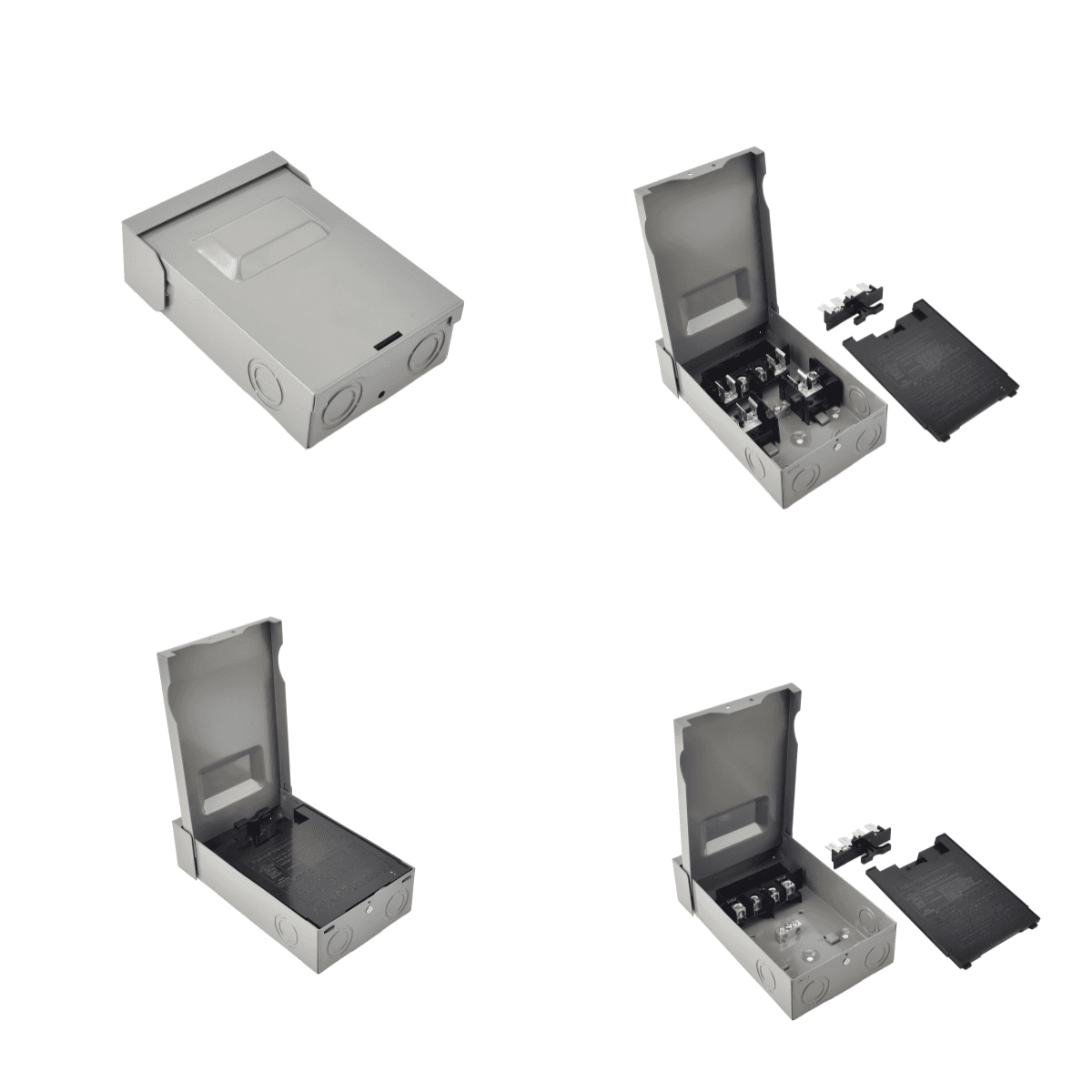
Outdoor AC disconnect enclosures are continuously exposed to rain, humidity, sunlight, airborne contaminants, and repeated temperature changes. A stable exterior finish is important, but the visible gray surface is only the final stage of the protection system. The condition of the steel and the coating layers beneath that finish also influence long-term outdoor performance.
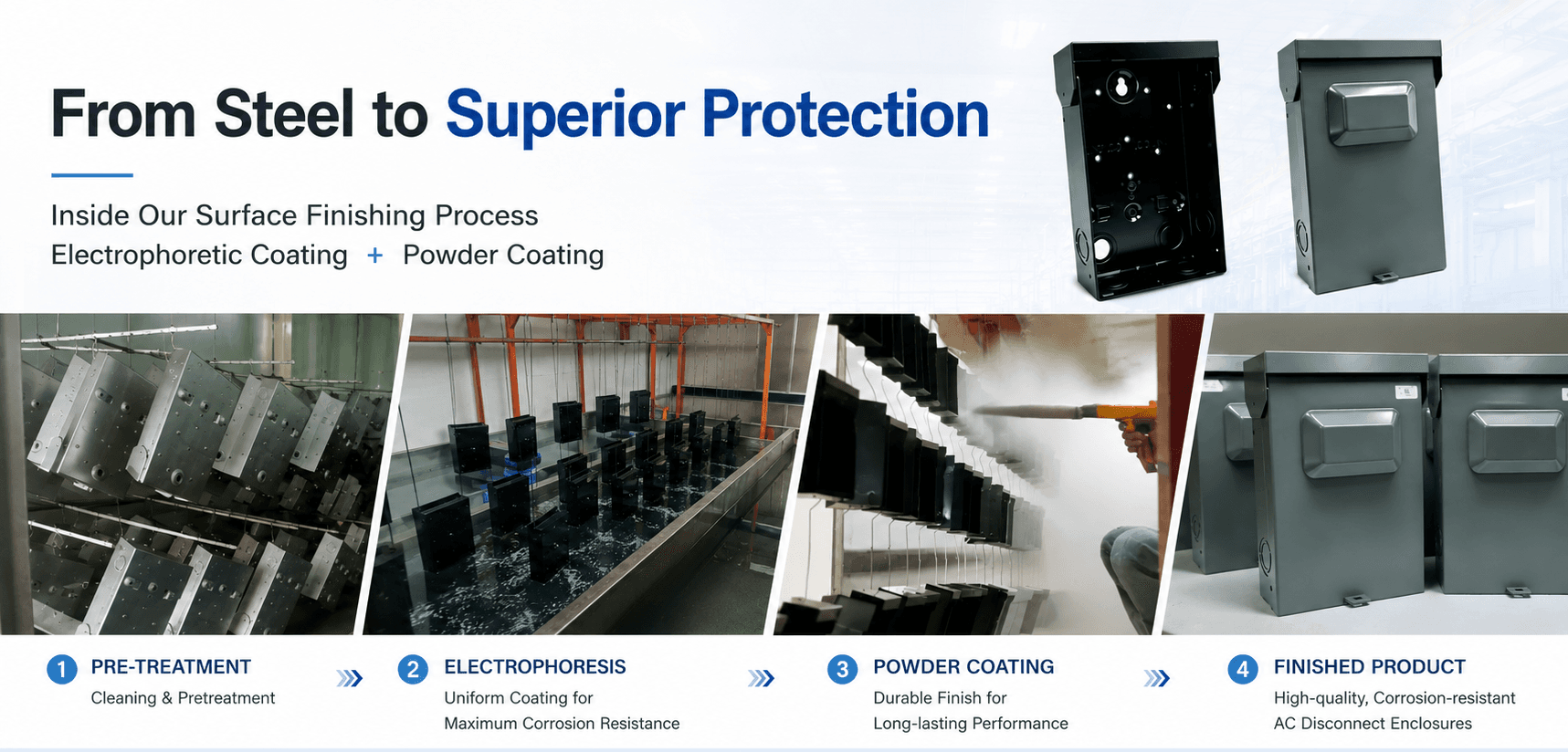
At Daheng Electric, each stamped steel enclosure passes through pretreatment, electrophoretic coating, and powder coating before final assembly. Pretreatment prepares the steel surface. Electrophoretic coating forms a uniform black protective foundation, including across complex formed geometry. Powder coating then creates the finished gray exterior. This article explains the engineering purpose of each stage and why complete coating coverage matters for an outdoor electrical enclosure.
Engineering context
Why Surface Finishing Matters
Outdoor electrical enclosures must maintain structural protection and a stable surface finish while operating through changing environmental conditions. Rain and humidity can introduce moisture around edges, openings, and mounting areas. Sunlight and daily temperature cycling can gradually affect the exterior surface. Airborne contaminants may also remain on exposed areas and collect around formed geometry.
Appearance alone does not determine durability. A uniform topcoat may look complete while the quality of the underlying surface preparation still affects adhesion and coating consistency. Pretreatment removes residues and prepares the stamped steel so that the following coating stages can form a stable bond.
The enclosure is also more complex than a flat sheet of metal. Knockout openings, folded edges, corners, small mounting points, and stamped features create surfaces that must receive consistent coverage. A reliable finishing process therefore begins before the final visible powder-coated layer is applied and treats preparation, foundation coating, and exterior finish as connected manufacturing stages.
The final finish is visible. The protection beneath it is equally important.
Four controlled stages
Our Surface Finishing Process
The production sequence shown in the opening illustration progresses from steel surface preparation to the finished enclosure used for final assembly.
Pretreatment
Cleaning and preparing the stamped steel surface.
Electrophoretic Coating
Applying a uniform protective coating over complex enclosure geometry.
Powder Coating
Creating the final durable exterior finish.
Finished Product
Ready for assembly and outdoor HVAC applications.
Different layers, different functions
Why Electrophoretic Coating Matters
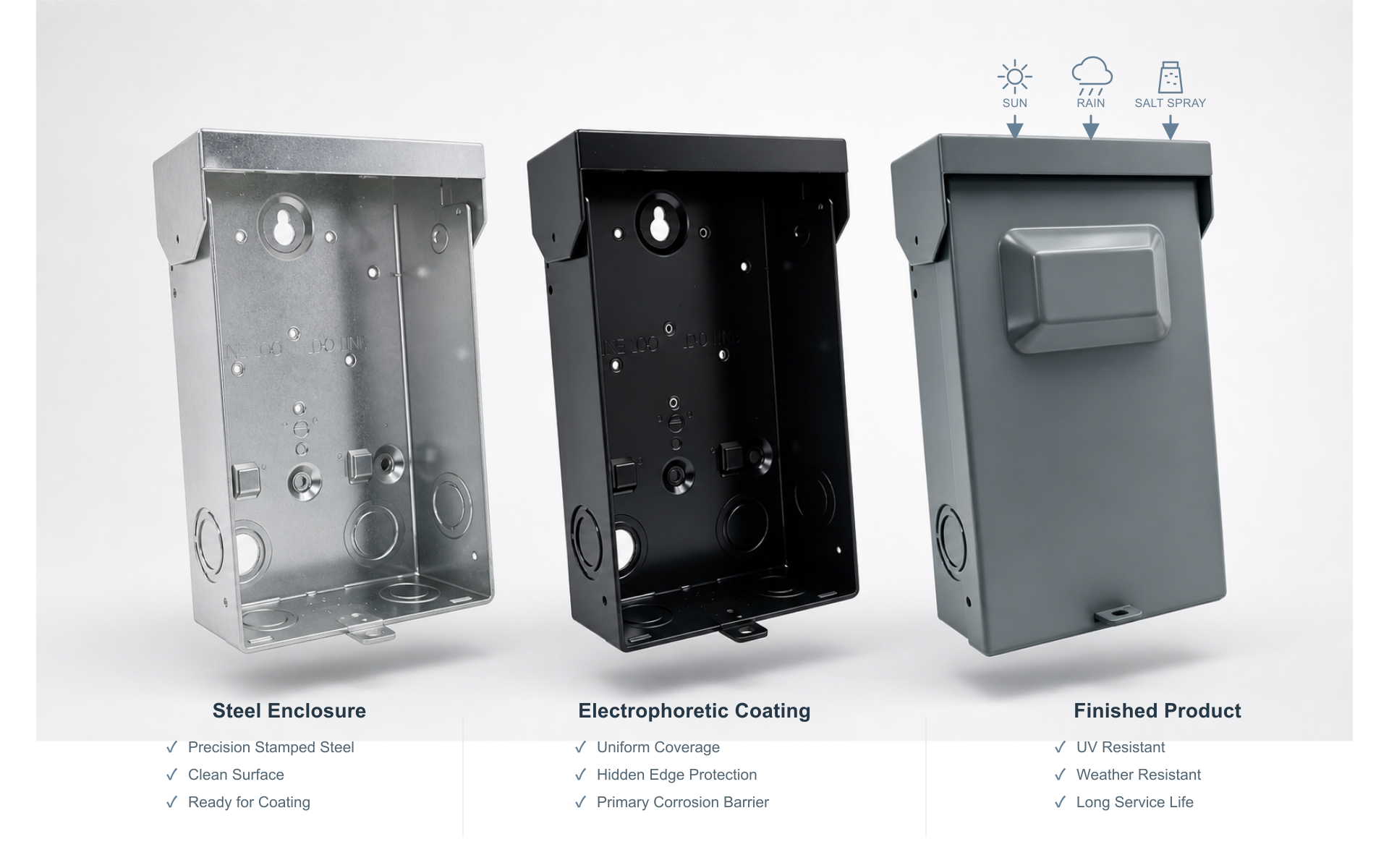
The illustration presents three manufacturing stages of the same enclosure. The stamped steel body provides the enclosure's structure and formed geometry. Electrophoretic coating creates the primary coating foundation over the prepared steel surface and establishes coverage across the enclosure before the exterior finish is applied.
Powder coating performs a different role. It creates the visible gray surface and contributes to the finished enclosure's appearance and resistance to normal outdoor exposure. Electrophoretic coating and powder coating are therefore complementary rather than interchangeable: one establishes the underlying coverage, while the other completes the final exterior surface.
“Powder coating provides the finish.
Electrophoretic coating provides the foundation.”
Coverage-critical geometry
Where Corrosion Protection Matters Most
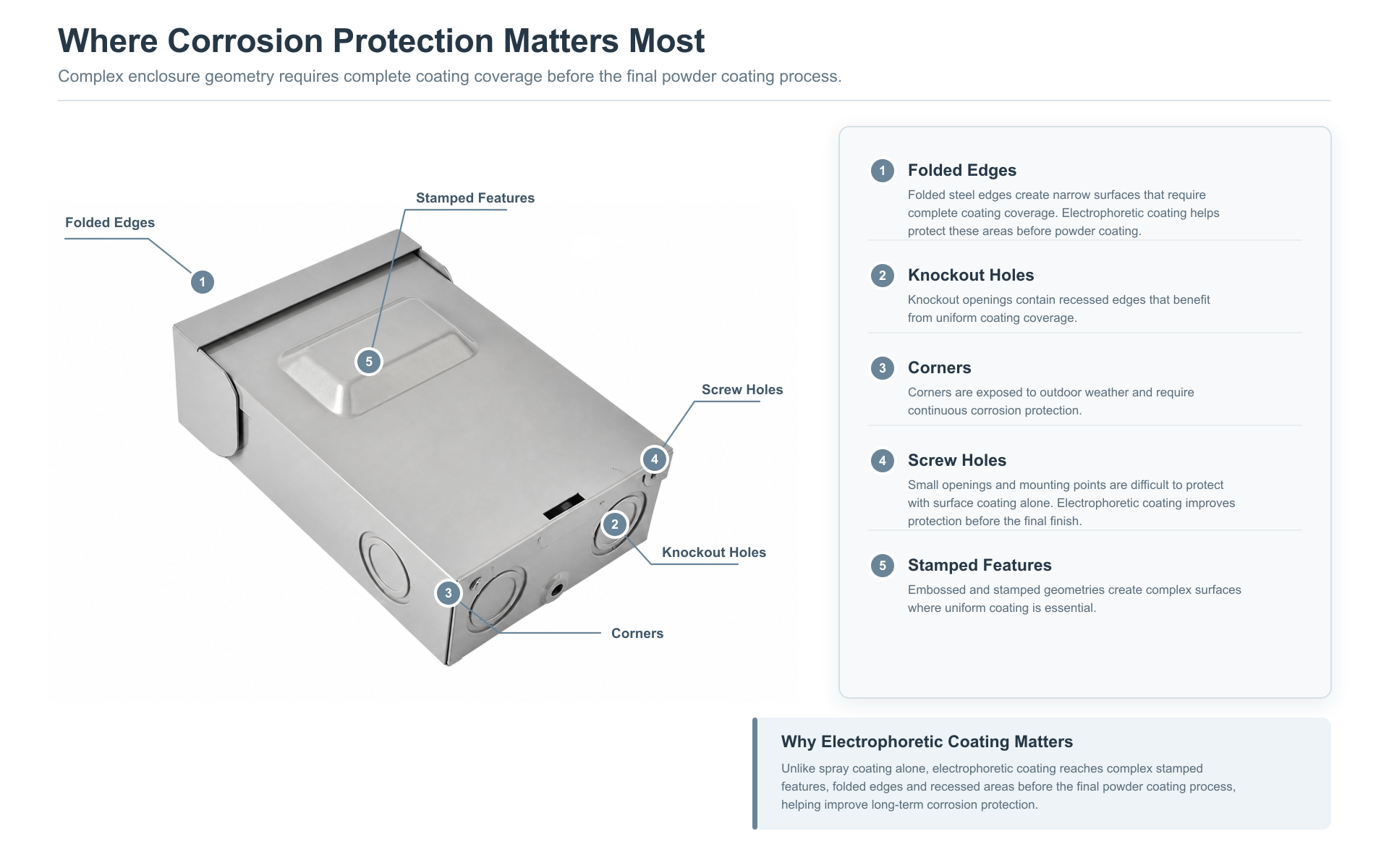
An AC disconnect enclosure is not a simple flat panel. Forming and stamping create folded edges, corners, circular knockout openings, mounting points, small openings, and raised features. Each change in geometry introduces another surface orientation, narrow edge, or recessed area that must be reached during finishing.
Consistent coverage matters because these features are part of the finished enclosure, even when they are less visible than the broad front surface. Electrophoretic coating uses an immersion-based, electrically assisted process that helps establish coating over the formed enclosure before the final powder coating stage. This is particularly relevant around recessed features, narrow edges, and openings where a directional surface application may have less consistent access.
The objective is not to make an enclosure corrosion-proof. It is to control the preparation and coating sequence so complex steel geometry receives a more complete and consistent protective foundation before the final exterior layer is applied.
Process verification
Quality Verification
Coating Thickness Inspection
Routine coating thickness verification helps maintain process consistency.
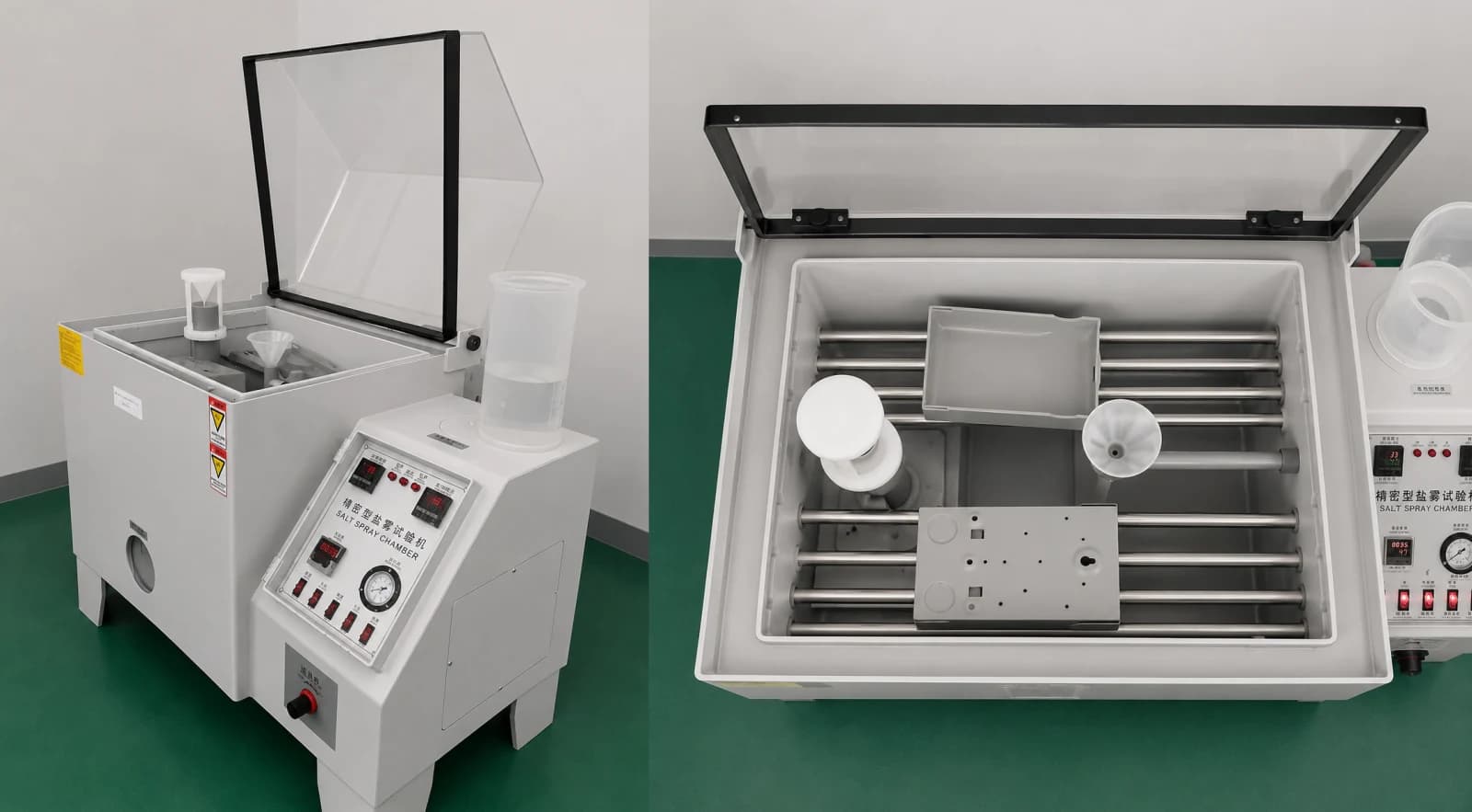
Neutral Salt Spray Testing
Our coating evaluation work includes neutral salt spray testing based on ASTM B117 conditions.
Final Appearance Inspection
Each enclosure is visually inspected before assembly and packaging.
Conclusion
Why Manufacturing Process Matters
Customers normally see the finished gray enclosure. Its appearance is easy to inspect, but the manufacturing work beneath that surface is less visible. Long-term outdoor performance depends on the condition of the steel, the consistency of surface preparation, the coverage established by electrophoretic coating, and the quality of the final powder-coated finish.
Pretreatment prepares the stamped steel and supports coating adhesion. Electrophoretic coating creates a uniform protective foundation across the enclosure and its complex geometry. Powder coating provides the visible exterior finish. Thickness checks, coating evaluation, and final appearance inspection help monitor the process before assembly and packaging.
For OEM buyers, distributors, and private-label programs, understanding these stages makes it easier to evaluate manufacturing capability beyond color and appearance. More information is available on the Manufacturing and Quality pages.
Looking for an OEM Manufacturing Partner?
Contact Daheng Electric to discuss OEM, private-label and bulk AC Disconnect enclosure manufacturing.