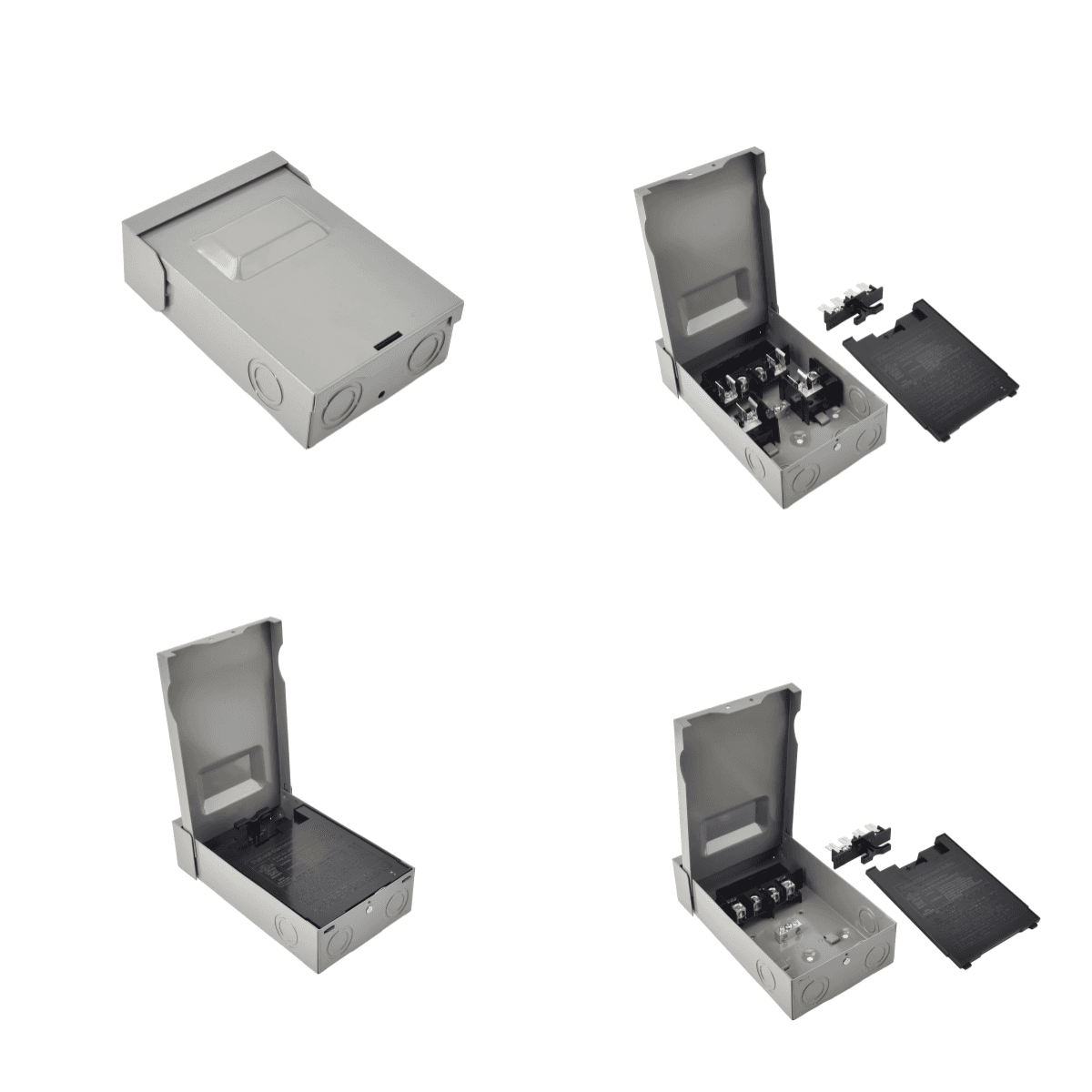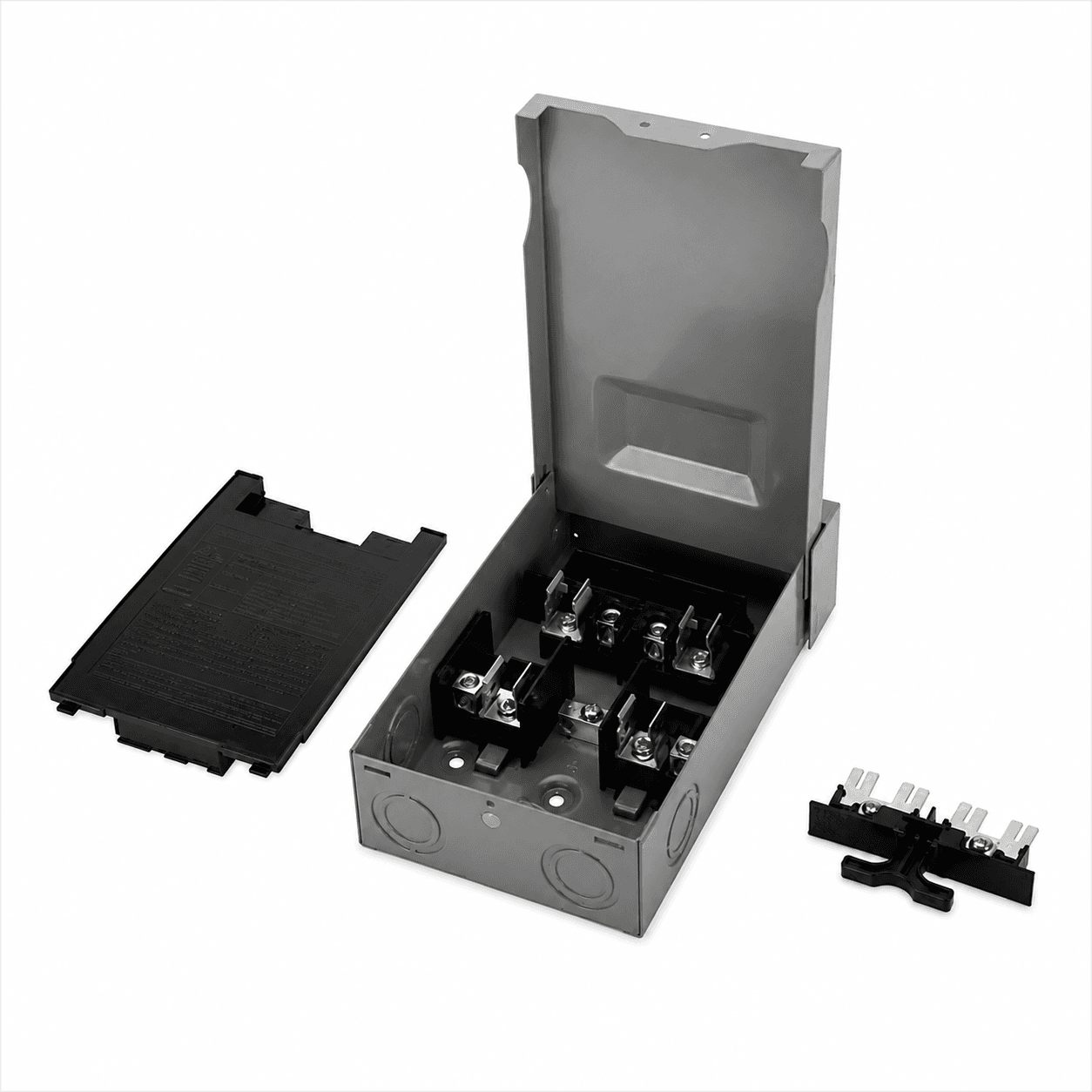
That is the useful first distinction. Both products disconnect power locally; the fused version also holds fuses that provide protection when properly selected and installed. The choice is about the equipment's protection requirements, rather than whether a fused box looks more substantial or costs more.
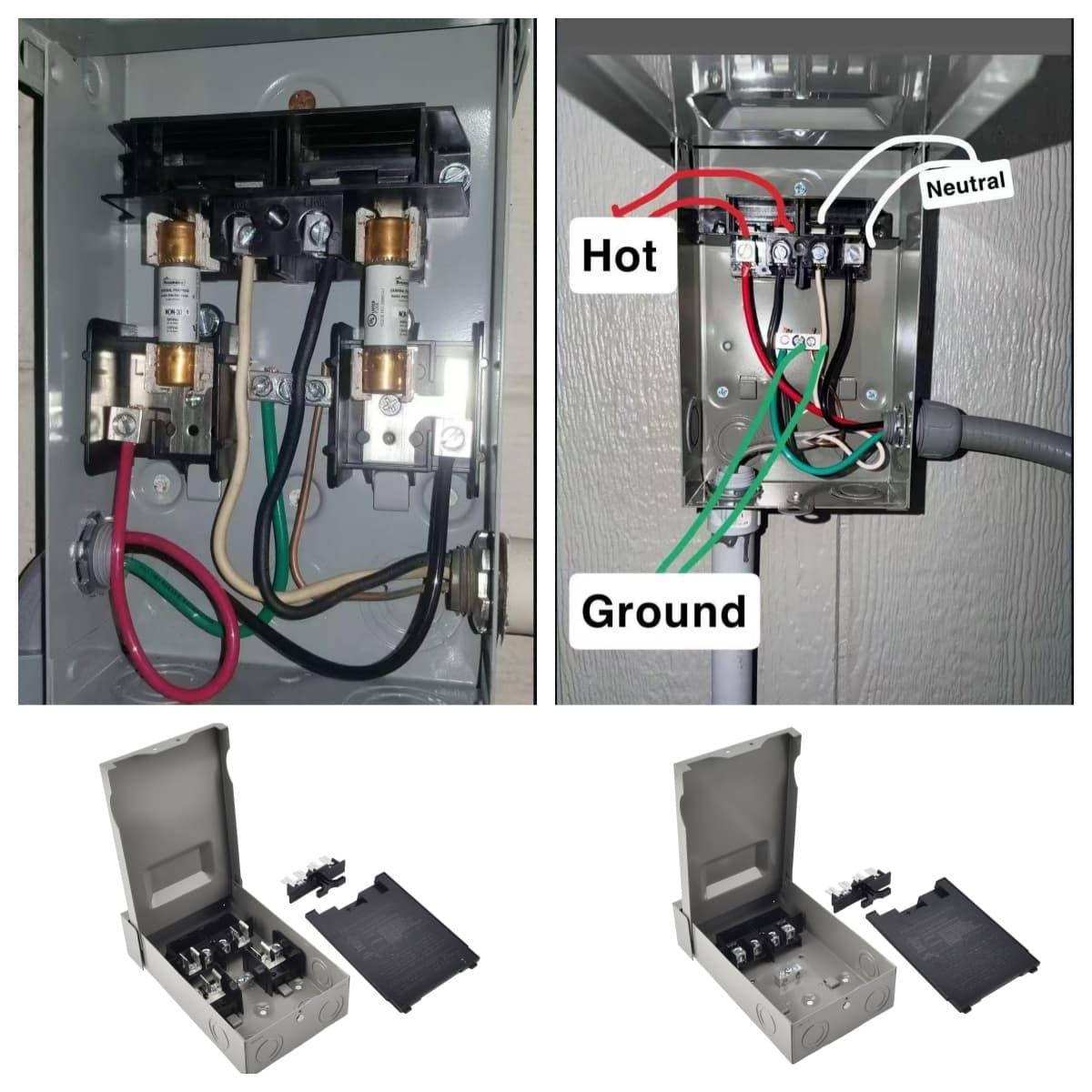
A Quick Guide to the Right Starting Choice
| Your situation | Product to consider first | What makes that choice appropriate |
|---|---|---|
| Equipment permits a breaker; a suitable dedicated breaker already protects the circuit | Non-fused disconnect | Local isolation is needed, but local fuses are not required |
| Equipment instructions require fuses; those fuses are not already provided in the circuit | Fused disconnect with the specified fuses | It can provide the required fuse protection near the unit |
| An engineered project specifies a fused disconnect or a particular fuse arrangement | Specified fused configuration | The selection must preserve the designed protection and ratings |
| Required fuse protection is already provided upstream | Non-fused may be suitable | The protection location, disconnect, and complete circuit must meet the equipment and project requirements |
| Nameplate wording is unclear, or the existing circuit is unknown | Obtain the equipment manual and circuit information first | Fused cannot resolve an unknown electrical design by itself |
"Upstream" simply means closer to the electrical supply, usually in the panel before power reaches the outdoor disconnect.
Why a Non-Fused Disconnect Often Makes Sense
In a suitable breaker-protected installation, the panel breaker provides branch-circuit short-circuit and ground-fault protection. The outdoor non-fused disconnect provides the nearby shutoff for service. They have different jobs.
Adding fuses at the outdoor box is not automatically necessary just because it is an air conditioner. If the equipment permits the breaker arrangement and no project requirement calls for local fuses, a non-fused model keeps the local assembly simple and avoids adding fuses that must be selected and replaced.
However, a non-fused disconnect does not trip like a breaker. Its ampere marking describes its rating, not an automatic protection setting.
When a Fused Disconnect Is the Better Starting Choice
Start with a fused model when the equipment requires fuse protection that is not already present. It is also the appropriate product category when the project expressly specifies local fuses.
Read the nameplate together with the installation manual. "Maximum Fuse or Circuit Breaker" permits a different selection path from instructions expressly requiring "Fuses Only." A maximum-fuse marking should be checked against the manual before assuming a breaker is an acceptable substitute.
The fuse specification matters. It includes the current and voltage ratings, approved fuse class, interrupting capability, and any required time-delay characteristic. Fuses that share an ampere value are not necessarily interchangeable.
Three Practical Examples
Example 1: Breaker protection is permitted
A hypothetical outdoor unit permits a fuse or circuit breaker up to 30A. Its existing dedicated 30A breaker has been confirmed suitable, and the project does not require local fuses.
Starting choice: a suitable non-fused AC disconnect. The existing breaker performs the protection function, while the disconnect supplies local isolation. Its switch and motor-load ratings still need to match the installation.
Example 2: The equipment requires fuses
Another unit's instructions require specified time-delay fuses, with a 30A maximum. The existing supply has a breaker but no required fuses.
Starting choice: a fused disconnect that accepts the specified fuse type. The exact fuse amperage follows the equipment instructions; "30A maximum" does not automatically mean every installation must use 30A fuses. The upstream breaker does not, by itself, satisfy an explicit fuse requirement.
Example 3: Required fuses already exist
A project supplies the unit from an upstream fused device with the required protection. The equipment and project allow that protection location.
Starting choice: a suitable non-fused local disconnect may be enough. A second set of local fuses is not automatically needed. This is why "equipment requires fuses" and "equipment requires a fused outdoor box" are not always identical statements.
Two Buying Mistakes to Avoid
Assuming fused means fuses are included
A fused disconnect may be sold without fuses. Confirm the package contents or quotation, then specify the correct fuses separately if needed.
Assuming more protection devices always means a better installation
A fused box is not a universal upgrade. Its benefit depends on using the right fuses in a suitable circuit. Likewise, do not remove an existing fused disconnect until required fuse protection has been accounted for.
What You Should Know Before Ordering
Your initial decision can be straightforward: breaker protection permitted and correctly provided - consider non-fused; required fuses missing - consider fused. Before ordering, record the equipment model, permitted protection type, protective-device rating, and supply voltage. A photo of the nameplate plus the electrical section of the manual is a useful starting package.
The installer then confirms switch ratings, conductor compatibility, fault-current suitability, and local requirements. This guide helps you identify a likely product category; it does not approve an existing circuit or replace an installation design. U.S. and Canadian installations follow their respective applicable codes.
For the separate current-rating choice, read 30 Amp vs 60 Amp AC Disconnect: Which One Do You Need?.
Daheng Electric manufactures fused and non-fused disconnects for wholesale and OEM supply. Send your required configuration and fuse specification through our contact page, or review our OEM services.